Executive Summary
We have successfully implemented a real-time 3D fire simulation system using GPU-accelerated fluid dynamics. Our system achieves physically realistic flame behavior through Navier-Stokes equations, volumetric rendering with blackbody radiation, and advanced post-processing effects. The current implementation runs at 30+ FPS on high-quality settings with a 96³ simulation grid.
Accomplishments
3D Fluid Simulation
Implemented stable Navier-Stokes solver with Semi-Lagrangian advection and temperature-driven buoyancy
Volume Rendering
Ray marching with physically-based blackbody radiation color mapping (800K-3000K)
Heat Refraction
Screen-space heat distortion using temperature gradients with temporal filtering
Real-time Performance
Achieved 30+ FPS at high quality, 60+ FPS at medium quality on RTX GPUs
Interactive Controls
GUI with real-time parameter adjustment, camera controls, and quality presets
Performance Monitoring
FPS graphs, memory tracking, and detailed frame time analysis
Technical Implementation Details
Fluid Simulation Core
- Grid Resolution: 96³ voxels with adaptive time stepping
- Advection: Semi-Lagrangian method with tri-linear interpolation
- Pressure Solver: Jacobi iteration (40 iterations) for incompressibility
- Buoyancy Model: Temperature-driven with adjustable α and β parameters
- Boundary Conditions: No-slip at bottom, open boundaries at top
Rendering Pipeline
- Volume Ray Marching: Adaptive step size (0.005 base) with early termination
- Color Model: Blackbody radiation LUT with smooth interpolation
- Emission: Temperature and density-dependent with adjustable scale
- Post-processing: Bloom effect, filmic tone mapping, and vignetting
- Heat Refraction: Screen-space distortion based on temperature gradients
Live Demo
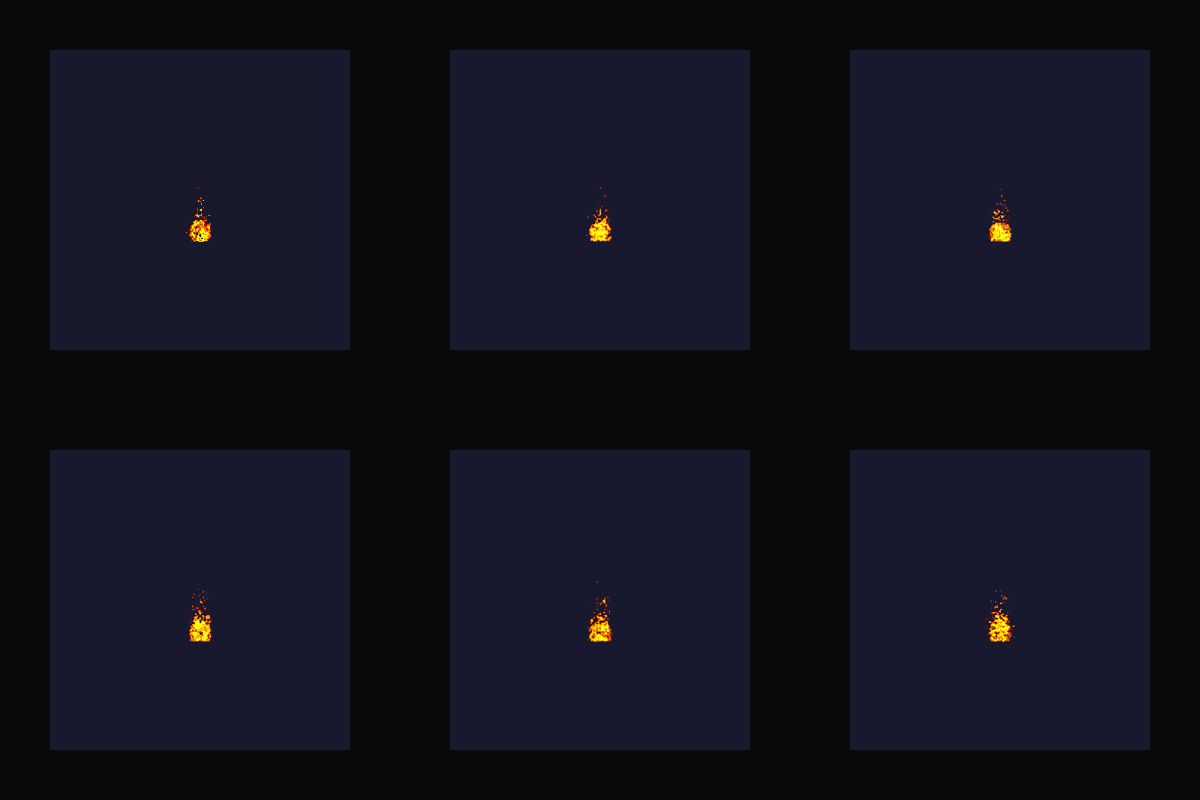
3D Volumetric Flame
Real-time flame simulation with natural turbulent motion and realistic color gradients from dark red to bright yellow-white.
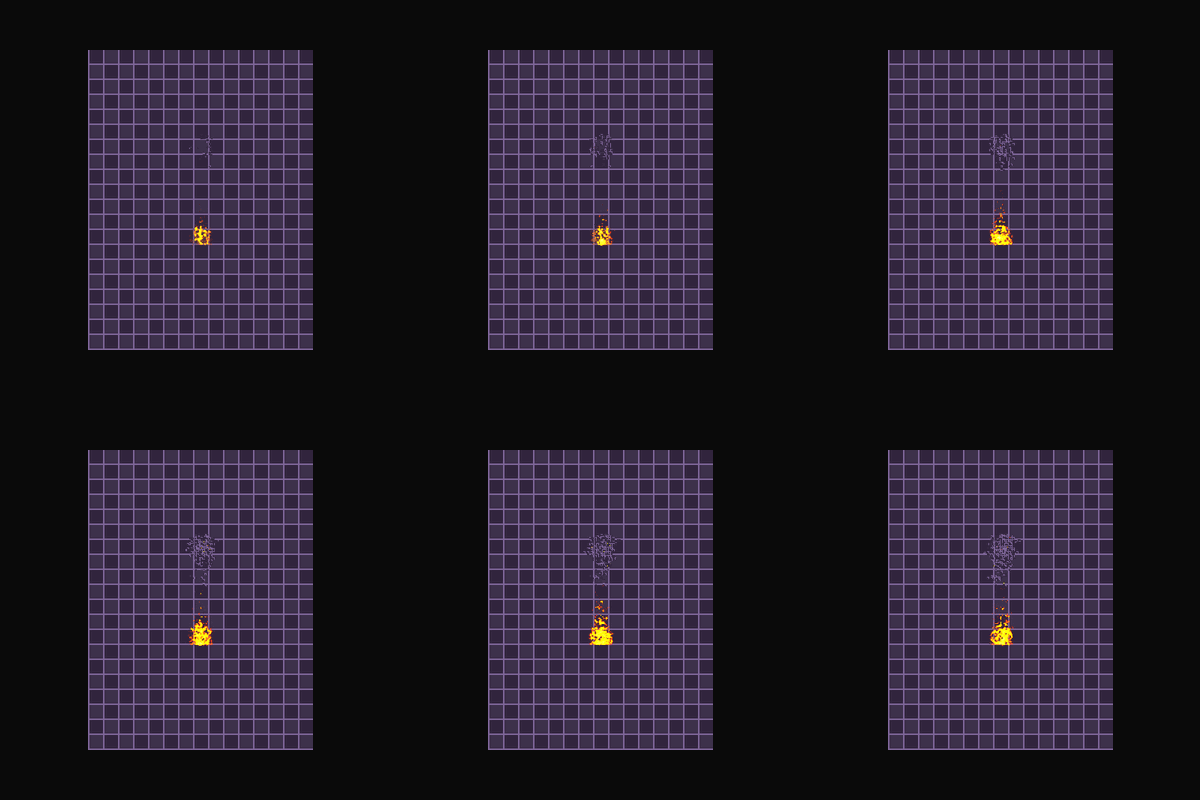
Heat Distortion Effect
Screen-space refraction creates realistic heat haze, distorting the background based on temperature fields.
Interactive Features
- Camera Controls: Full 3D orbit and zoom with smooth transitions
- Flame Source: Adjustable position (X, Z coordinates) in real-time
- Physical Parameters: Temperature scale, fuel injection rate, buoyancy strength
- Rendering Options: Absorption coefficient, emission scale, bloom intensity
- Quality Presets: Low (120 FPS), Medium (60 FPS), High (30 FPS), Ultra (15 FPS)
- Visualization Modes: 3D volume rendering or 2D slice views (density/temperature/velocity)
Video & Presentation
1-Minute Progress Video
Video demonstrates current progress with all team members presenting different aspects of the project.
Presentation Slides
Reflection & Next Steps
Progress vs. Original Plan
We are on track with our proposed timeline. All baseline features have been successfully implemented during Week 1 as planned. The system is stable, performant, and ready for enhancement features in Week 2.
Completed (Week 1)
- ✓ 3D fluid simulation with stable solver
- ✓ Volumetric rendering with blackbody radiation
- ✓ Heat refraction post-processing
- ✓ Interactive GUI and controls
- ✓ Performance monitoring system
- ✓ 30+ FPS at high quality settings
Key Achievements
Our implementation successfully demonstrates that real-time, physically-based fire simulation is achievable on consumer GPUs. The combination of Taichi's GPU acceleration and careful algorithm optimization has resulted in a system that balances visual quality with interactive performance.
Next Milestone: Final presentation on August 12 with enhanced features and polished demo.